Let's name what's actually happening
You used to be ready in five minutes. Now it takes fifteen, or twenty, or longer. Nothing's wrong with you. Your nervous system, your hormones, your stress load, your attention span, your relationship dynamic.they've all shifted. Arousal slowdown is one of the most common things I see in my practice, and it's also one of the easiest to work with once you stop treating it like a problem.
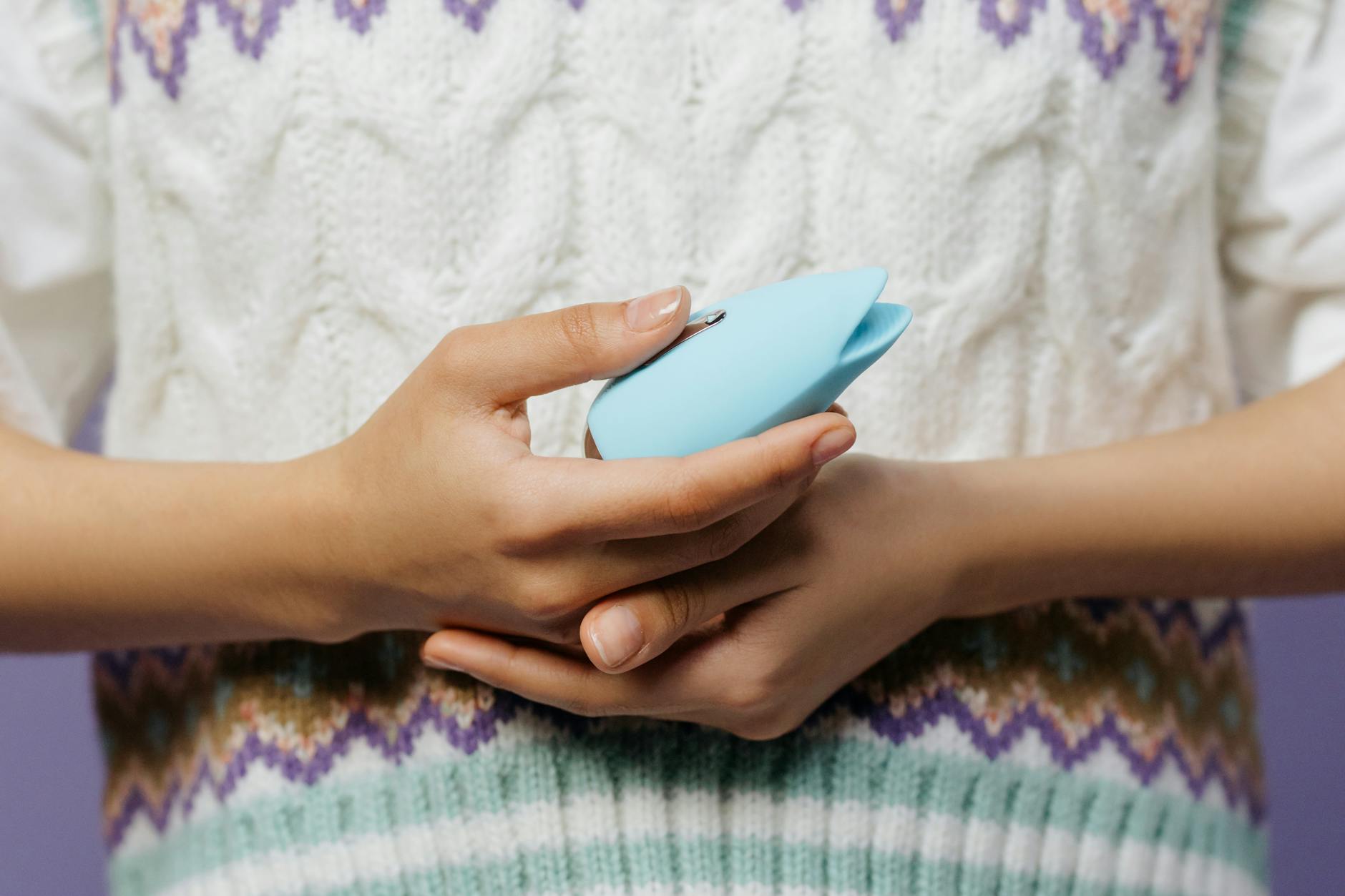
Here's the thing nobody tells you: longer arousal can actually be better. Not as a consolation prize, but legitimately. When you build arousal slowly, your body has time to signal what it actually wants. Your nervous system settles. Your partner (if you have one) gets to pay attention instead of rushing. A lemon clitoral vibrator becomes not a shortcut, but a tool that works with your actual timeline.
Why arousal genuinely takes longer now
There are about five reasons this happens, and they're rarely the one you think.
Stress and mental load. Your brain is half somewhere else. Kids, work emails, the kitchen that needs cleaning, a conversation that went sideways. You can't arrive at your body when half of you is still doing the grocery list. This is the number one reason arousal slows down, and it has nothing to do with your capacity for pleasure.
Medication and hormonal shifts. Antidepressants, birth control, post-menopausal drops in estrogen and testosterone.these all change the speed of arousal. It's not permanent, and it's not your fault. It's biochemistry.
Attention and touch quality. If you're with a partner, what used to work might not anymore because the quality of attention has changed. You're not being touched in the way that actually lands. Nobody's paying attention. Everyone's performing.
Pelvic floor tension. Tension in the pelvic floor muscles slows arousal considerably because your nervous system can't fully relax into it. This often shows up as "I feel numb" or "nothing's working," when really the muscles are holding on.
Relationship dynamics. If there's unresolved tension, mismatched desire, or a pattern of feeling unseen, your body knows. Arousal won't build fully until the emotional baseline shifts.
The good news: almost all of these are workable. And when you work with them instead of against them, arousal becomes richer, not just longer.
How to expand your arousal timeline strategically
Don't just add time. Restructure it.
Separate touch from sex. This is the single most powerful move. Have 10 minutes of touch that has zero agenda.no genitals, no goal, no performance. Just skin. Hands. Attention. Your nervous system learns that touch doesn't always mean "we're doing this now," and that permission alone can shift arousal.
Start with a lemon vibrator earlier than you think you should. You don't need to be already turned on to use it. Start at pattern 1 or 2 on the Lem and spend 5-10 minutes just letting your body feel sensation without pressure to respond. Arousal often builds backward.sensation first, then desire follows. The lemon clitoral vibrator is designed for this. It doesn't require that you're already ready. It helps create the readiness.
Get strategic about the environment. Temperature, lighting, whether your phone is in the room, whether you're rushed.these matter wildly. If you're trying to build arousal on a tight schedule with your phone buzzing, your nervous system won't cooperate. You can't manufacture relaxation. You can only remove obstacles to it.
Use a longer warm-up with a partner. If you're with someone, tell them: "I need 20 minutes where we're just touching. No goal. No rush." Most partners are relieved to hear this. It takes the pressure off them to perform magic, and it gives both of you permission to slow down.
Build in a transition moment. Between regular life and sex, build in a 5-minute reset. Shower, put on something you like, light a candle, sit and breathe. Tell your nervous system: "We're shifting now." Your body won't believe you if you go from work stress directly into bed.
What the science says about extended arousal
There's actually a really good reason longer arousal often feels better. When arousal builds slowly, your clitoris engorges gradually. Blood flow increases steadily. The vaginal tissue plumps. Your brain has time to release more oxytocin, the bonding hormone that makes pleasure feel connected rather than mechanical.
Quick arousal used to be the goal because the messaging was always "get to the orgasm." But research on pleasure.especially among people with vulvas.shows that arousal quality matters more than arousal speed. A slow build often results in more intense, longer-lasting orgasms. And if you're having a longer arousal time anyway, you might as well know that your body's probably capable of something richer than it was before.
The Lem works particularly well here because the suction pattern actually builds arousal in stages. You can spend 10 minutes at a low pattern, feel your body respond, then gradually increase. You're not chasing a target. You're following what your body's actually doing.
What to do if you're with a partner
This conversation needs to happen outside the bedroom. "I notice arousal takes longer for me now" is very different from "You're not turning me on anymore." One is informational. One sounds like criticism, and your partner will go defensive.
Try: "My body's rhythm has changed. I'm not less interested. I just need more time now. Here's what helps." Then be specific. Do you need more touch before genitals? Do you need him to check in verbally? Do you need to use a lemon vibrator solo first to warm up, then bring him in? Do you need to not be touched at all for a few minutes while you settle?
Partners who care will actually be relieved. The alternative.watching you try to perform an arousal that isn't there.is exhausting for both of you. Slowing down together is way easier.
The mental game when arousal takes time
Here's where most people sabotage themselves: they start waiting for arousal and then get frustrated that it's not happening. That frustration literally kills arousal. Your nervous system reads impatience as threat.
Instead, separate the experience from the outcome. You're not using the lemon vibrator to "get there faster." You're using it to spend 20 minutes feeling sensation and seeing what happens. If you orgasm, great. If you don't, you still had 20 minutes of pleasure and release. Both are valid.
Many of my clients find that the moment they stopped treating longer arousal as a problem, it actually shortened. Not because they figured out a trick, but because the pressure lifted. Your body relaxes when it knows there's no performance deadline.
When to check in with a professional
If arousal has basically disappeared and you've eliminated stress, medication isn't new, and your relationship feels solid, it's worth a conversation with a gynaecologist. Sometimes slower arousal is just a timeline shift. Sometimes it's a sign that something else is happening.low testosterone, thyroid issues, or depression that hasn't surfaced yet.
That's not a reason to panic. It's a reason to get information. Most things that slow arousal are treatable once you know what you're working with.
For relationship stuff specifically, a couples therapist can help you and your partner actually talk about desire timing without it becoming a wound. Many couples think they have a sex problem when what they actually have is a communication problem about sex.
FAQ: Arousal Timing and Lemon Vibrators
How long should foreplay actually take if arousal is slow?
There's no "should." But 15-25 minutes of focused attention before any genital touch tends to give most bodies enough time to settle into arousal. The Lem works well in this window because you can use it early without needing to be fully turned on first.
Can using a lemon vibrator make arousal slower over time?
No. What can happen is desensitization if you use the same pattern at the same intensity every single time. Vary the patterns. Switch it up. Use it solo sometimes and with a partner other times. Novelty actually speeds arousal back up because your nervous system has to pay attention again.
What if my partner thinks longer arousal means I'm not attracted to them?
That's a conversation, not a vibrator problem. Your partner's feelings matter, and they also can't be fixed by you performing faster arousal. You need to actually tell them: "This isn't about you. My body has a different rhythm now. I'm more into this than ever." And then show them. Longer arousal with full attention can feel way more connected than quick arousal with half-presence.
Is it normal to need more foreplay after 40?
Completely normal. Hormones shift, nervous system sensitivity changes, life stress increases. None of that means your pleasure capacity has gone down. It usually means it's expanded.
Can medication that slows arousal be changed?
Sometimes. Talk to your doctor. If you're on an SSRI that's killing arousal, there might be alternatives, or you might add something that helps. Don't just stop taking it. But do ask.
What if I'm solo and arousal takes forever?
That's actually the easiest scenario to work with because there's zero pressure. Spend 30 minutes if you want. Use a lemon vibrator without any goal. Let your body explore. Some of my clients find that solo sessions with a longer timeline actually teach them what they actually like, which makes partnered sex way better.
The reframe that changes everything
Longer arousal isn't a downgrade. It's information. Your body's telling you what it needs. More time. Different touch. Less pressure. A change in environment or relationship dynamic. A lemon clitoral vibrator works here because it respects that timeline instead of fighting it. You're not trying to rush yourself into something. You're building something real, slowly, in the time your actual body needs.
That's not compromise. That's actually better sex.
If you want to dig deeper into what's working and what's not in your pleasure life, reach out. Sometimes a conversation outside your own head helps clarify what's next.