Let's be real about the timing question
You've been dating three months. Things are good. The sex is good. And you're thinking about bringing a lemon vibrator into it, but you're stuck on one question: Is it too soon?
Here's what I've learned from years of working with couples: the "right time" is almost never when you think it is. Most people wait too long because they're nervous. By the time they finally bring it up, they've invented a whole narrative in their head about how their partner will react. Spoiler: the actual reaction is usually way less dramatic than the story you wrote.
The real timeline isn't about how many months you've been together. It's about whether you can say "I want to try something" without your nervous system exploding. If you can say it clearly and calmly, you're ready.
What you're actually communicating when you introduce a toy
Here's the thing that shifts the whole dynamic: you're not really asking permission to use a vibrator. You're saying three things at once, and your partner needs to hear all three.
First: "I'm comfortable enough with you to be vulnerable." Bringing a toy into sex means admitting you want specific kinds of stimulation. That's not rejection of your partner. That's trust.
Second: "I want this to feel good for both of us." A lemon vibrator works because it targets the clitoris with precision that hands alone can't match. You're saying you care about your own pleasure and you want your partner to benefit from that clarity too.
Third: "I'm interested in exploring together." Toys aren't about replacing a partner. They're about expanding the palette. It's the difference between cooking with just salt and having access to the whole spice rack.
If you frame it that way in your head first, it changes how you say it out loud. The conversation becomes easier because you're not asking for something weird. You're inviting them into something you've been thinking about.
The conversation you actually need to have
Don't ambush this mid-sex. Don't leave a vibrator on the nightstand with zero context. Don't say "a lot of people use these." That's defensive and it lands wrong.
What actually works: pick a moment when you're both relaxed, clothes on, not in bed. Tell the truth in three sentences.
"I've been thinking about trying a vibrator. I think it would feel really good, and I'd love to explore it with you. Are you open to that?"
That's it. You've said: what, why, and what you're asking. If they say yes, great. If they say "tell me more," that's also great. If they say no or "I need to think about it," that's information you need too.
What you're listening for in their response isn't their exact words. You're listening for curiosity or fear. Curiosity means they're interested but maybe nervous. Fear means something else is going on. Those require different approaches.

Photo by cottonbro studio on Pexels
If they're curious: "I was thinking we could use it together. Maybe during foreplay or during sex. I'm not totally sure yet, but I want to figure it out with you."
If they're afraid: "What are you worried about?" Then listen. Don't defend. Don't explain. Just listen. Often the worry isn't about the toy. It's something else wearing a toy disguise. Like "Does this mean I'm not enough?" That's a different conversation than "How does this work?"
How to actually use it together the first time
Less pressure than you're imagining, I promise. Your first time using a lemon vibrator with a new partner should feel easy, not like a performance.
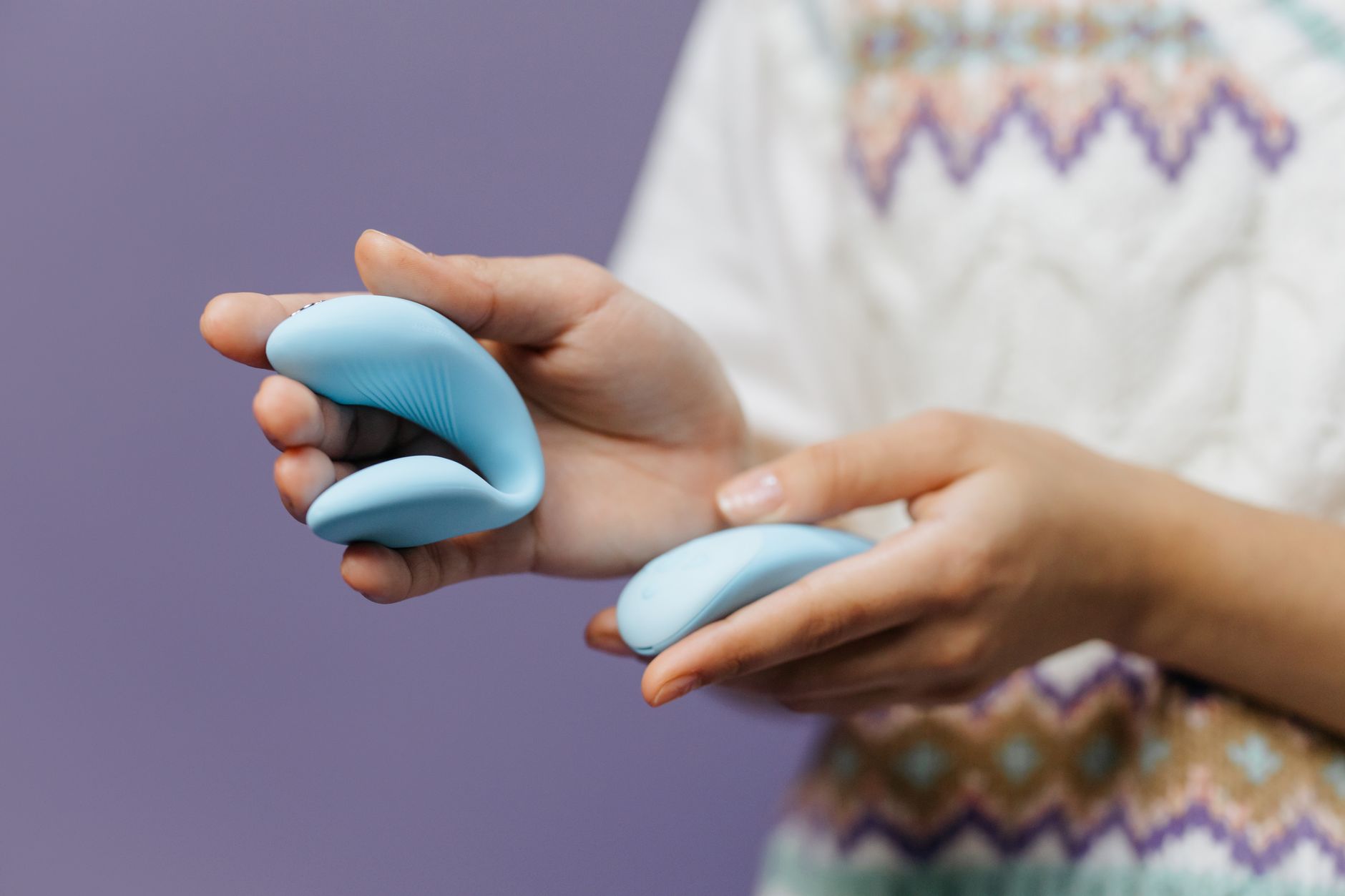
Start by showing them the actual device. Hand it to them. Let them see that it's not intimidating. It's a small, sleek tool. Nothing scary. Some people feel better when they can hold it first, understand the weight and size.
Talk through the patterns together. The Lemon Clitoral Vibrator has multiple intensity settings and patterns. Show them how they work. Let them hold it against their own arm so they feel what different intensities actually feel like. This kills a lot of the mystery.
Then bring it into sex naturally. You might use it on yourself during foreplay while they're touching you elsewhere. You might have them use it on you. You might both figure it out as you go. There's no script here. What matters is that you're both aware it's happening and you can adjust in the moment.
Start at a lower intensity. You can always turn it up. You can't undo going too hard too fast.
If at any point it doesn't feel good, you say so. "Let's try a different pattern" or "Actually, let me take over" or even "I think I need a break." No explanation needed. Just say it.
What usually goes wrong (and how to prevent it)
Three scenarios I see repeatedly with new couples:
Scenario one: They use it wrong and it hurts. You haven't shown them where the clitoris actually is or how the suction sensation works. They're applying it like a regular vibrator, which is not how a lemon vibrator functions. Solution: show them first. Let them practice on you with guidance. This isn't embarrassing. This is skill-building.
Scenario two: One person goes silent and then gets resentful later. They were uncomfortable the whole time but didn't say anything. They interpreted the vibrator as "you're not enough" and now they're quietly furious. Solution: check in before, during, and after. "How does this feel?" "Do you want to keep going?" "That was fun" or "That wasn't my thing." All are good answers.
Scenario three: The toy becomes a crutch immediately. Suddenly every time you have sex, the vibrator has to be there or you can't orgasm. This usually happens because the first experience was so efficient that it becomes the only option. Solution: don't use it every single time. Mix it up. The vibrator is a tool, not your only tool.
When you need to dig deeper
If your partner said no, or they said yes but seemed really uncomfortable, something else might be going on. Sometimes it's insecurity. Sometimes it's a boundary they're not ready to cross. Sometimes it's just "not my thing."
The conversation then isn't about convincing them. It's about understanding them. "Help me understand what's making you hesitant." Listen to the actual answer, not the answer you were hoping for.
If they're worried they're not enough, you might hear: "I feel like you need something I can't give you." The truth is: they're giving you presence, attention, skin-to-skin contact, and emotional intimacy. The vibrator is adding one specific sensation. Those aren't in competition.
If they have a specific boundary, you respect it. "I'm not ready to watch" is different than "I don't want toys in this relationship." One is about comfort level. One is a values thing. You get to decide if it matters to you. They get to decide if it matters to them.
The bigger picture
Introducing a lemon vibrator to a new relationship is one conversation, but it's actually a conversation about something much larger: whether you can ask for what you want and have it taken seriously.
If this goes well, it sets a tone. You just showed your partner that you can name a desire, that you're not ashamed of it, and that their willingness to explore it with you matters. That's the foundation for years of better sex and better communication.
If it goes badly, you get information too. You learn whether this person can hear a request without taking it as criticism. You learn whether they're curious about your pleasure or defensive about their own. Those are important things to know early.
Either way, you're gathering data about compatibility. And that's exactly what the first six months of dating is for.
People also ask
Should I introduce a vibrator before or after we're officially exclusive?
There's no rule. Exclusivity and comfort with toys aren't linked. Some couples bring up toys on the third date. Some wait until year two. The question isn't when you're official. It's when you feel safe enough to say "I want to try something." If you feel safe to sleep with them, you feel safe to have this conversation. If you don't feel safe, that's different information.
What if they want to use it and I'm the one who's nervous?
That's valid. You don't have to want the same things at the same speed. You can say "I'm interested but I need more time to think about it" or "I want to try it but I'm nervous, so let's go slow." You can watch them use it first before you participate. You can set whatever boundaries feel right. Their openness doesn't obligate you to move faster than you're comfortable.
Can I bring a vibrator into sex without having a big conversation first?
Technically yes. Practically, no. Surprising someone with a toy mid-sex often lands as disorienting or intrusive, not sexy. Even a quick "I want to try something, is that okay?" in the moment is better than no warning. You're both more relaxed if both of you know what's coming.
What if they want to use it and I don't want them to?
You get to say no. "I'm not comfortable with that yet" is a complete sentence. If they push, that's a sign that your comfort doesn't matter to them in the way you need it to. That's important to know. If they respect the boundary and maybe revisit it later, that's different. Respect for your no is non-negotiable.
Is using a lemon vibrator as a couple different from using one alone?
Completely. When you're alone, you're tuning into your own body and what feels good. With a partner, you're managing two nervous systems, two sets of preferences, and the dynamic of being watched or touched. That's harder and also more intimate. Take it slow and check in often.
What if it changes how we have sex permanently?
It might. You might find that you prefer using a lemon vibrator in certain contexts and not in others. You might find that it opens up other conversations about pleasure. That's actually a good thing. It means you're learning about each other. Sex that evolves is sex that stays interesting.
Introducing toys to a new relationship feels like it should be more complicated than it is. The real work is just one sentence: "I want to try this. Are you open to exploring it with me?" Everything else follows from that.