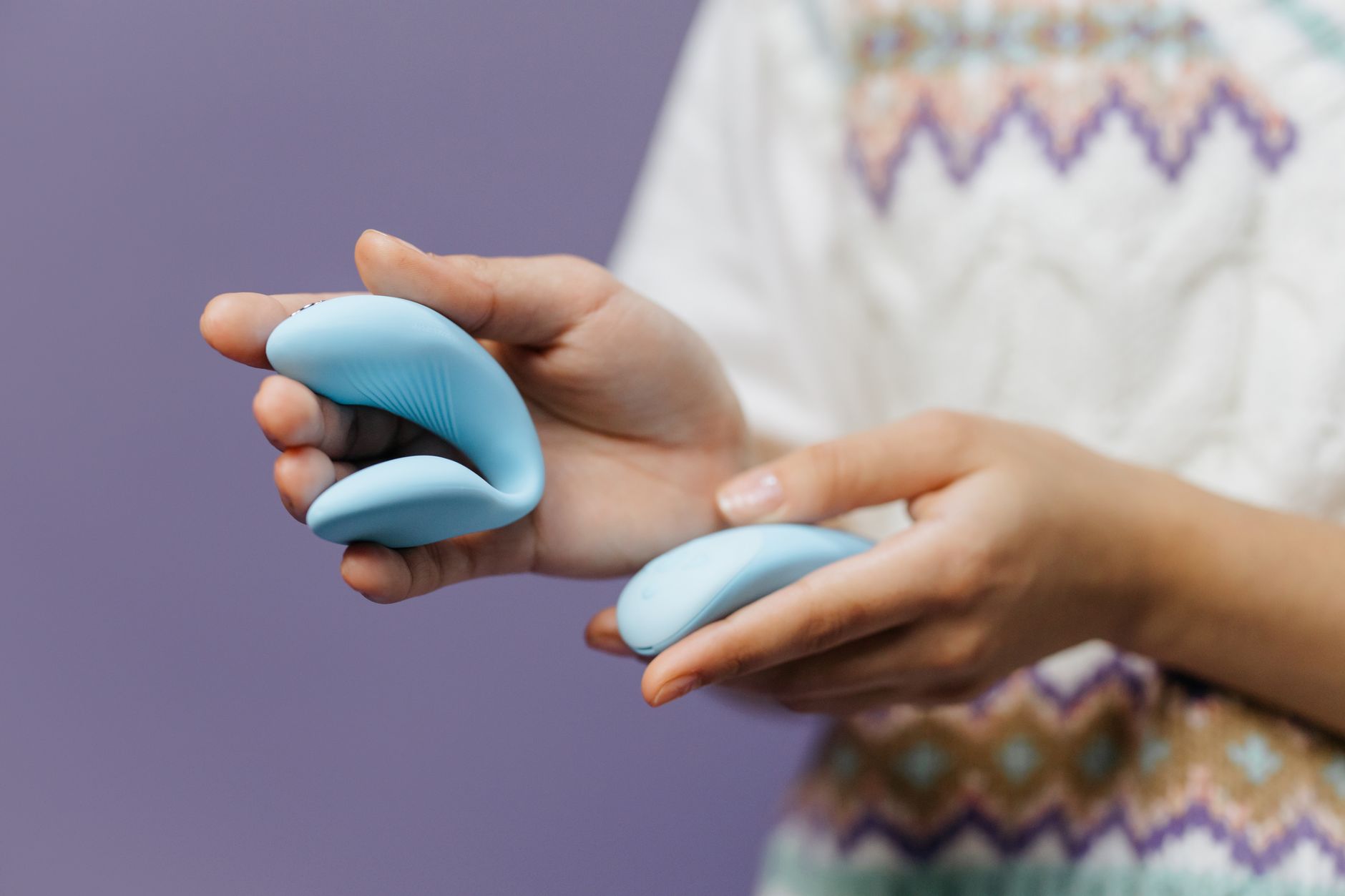
Here's what nobody tells you about low desire
Low libido isn't a character flaw, a sign you're broken, or proof that something is wrong with your relationship. It's one of the most common sexual concerns people experience, and it's also the one thing almost nobody talks about openly. Most of the conversation around sexual pleasure focuses on how to have better orgasms or more intense sensations. Almost nothing addresses the foundational problem: what do you do when you don't want sex in the first place.
Low desire shows up differently for different people. For some, it's a slow fade. For others, it's sudden. Sometimes it's context-dependent. "I want it in this situation but not that one." And sometimes it's a genuine flatline. I work with couples and individuals regularly who describe desire as something that used to exist and now doesn't. The good news: a lemon clitoral vibrator can be part of how you rebuild it.
But using one when your baseline desire is low requires a different approach than when you're already aroused and looking to intensify. Let's talk about how.
Why low desire happens (the actual reasons, not the myths)
Low libido has about twelve different root causes, and they're not all psychological. Stress is the obvious one. So are medication side effects, hormonal shifts, relationship disconnection, and sometimes just being burnt out from life. But here's what gets missed: the more you avoid sex because you don't want it, the lower your desire gets. Your brain literally learns that sex isn't part of your life anymore, and your body stops preparing for it.
This is where most people get stuck. They think, "I don't feel like it, so I shouldn't do it." That's sometimes true. But sometimes it's creating a self-reinforcing cycle where the less you engage, the less you want to. A lemon vibrator can interrupt that cycle by making it easier to reconnect with sensation and arousal before your brain even has to get involved.
The difference between willpower and accessibility
Don't try to use a lemon vibrator through pure motivation. That's exhausting and it doesn't work. Instead, make pleasure more accessible than resistance. If your clitoral lemon vibrator is sitting in a drawer upstairs and requires emotional preparation to access, you're not going to use it when desire is low. If it's clean, charged, and living somewhere you actually spend time, you're much more likely to reach for it on a random Tuesday.
Physical accessibility matters more than willpower when you're rebuilding desire. Set the environment up so that trying feels easier than not trying. That might mean keeping it on your nightstand. It might mean using it while you're doing something else. It might mean dimming the lights and putting your phone away, not because that's "the right way" but because it removes friction between you and the sensation.
Three ways to use your lemon vibrator when desire is low
Method one is exploration without expectation. Set aside maybe ten minutes, get comfortable, and use your lemon sexual toy to see what sensations feel good right now. Not what felt good six months ago. Not what you think should feel good. What actually does. You're gathering data on your own body. Press it in different places. Try different patterns. This isn't foreplay to anything. It's just sensation.
Method two is pairing it with something you already enjoy. A cup of tea, a show you're invested in, reading something that makes you laugh. Use your lem vibrator while you're doing something pleasurable that has nothing to do with sex. Your brain learns to associate the physical sensation with ease and comfort instead of with pressure to "perform" or "get aroused." Over time, the vibrator itself becomes a cue for something good happening.
Method three is consistent, low-pressure exposure. Most people assume you use a lemon clitoral vibrator to chase an orgasm. You don't have to. Use it for five minutes every few days just to stay in touch with sensation. Some days you'll feel more aroused. Some days you won't. The point is consistency, not intensity.
Why the lem vibrator works specifically for low desire
The suction mechanism on a lemon vibrator is fundamentally different from the way a traditional vibrator works. It's not aggressive or overwhelming. It pulls and releases, which mimics the natural rhythm of blood flow to the clitoris that happens during arousal. Because of that, you don't need to be already aroused to use it comfortably. You can start with it when desire is completely flat, and the sensation itself helps draw arousal up from nothing.
That's not poetic language. That's physiology. The clitoris has about eight thousand nerve endings, and when you stimulate it with consistent rhythm, you're literally building arousal in your nervous system. You're not waiting to feel desire and then acting on it. You're using sensation to create desire.
Start on the lowest setting. With a clitoral lemon vibrator, you don't need intensity to build arousal. Gentleness and consistency beat force every time when your baseline desire is low.
The conversation to have with your partner (if you have one)
If you're in a relationship, your partner probably notices the low desire. They might feel rejected. They might worry something is wrong with you or with the relationship. Having a conversation about this before you start using a lemon vibrator can prevent a lot of misinterpretation.
Here's what helps: frame it as a project you're working on together, not a problem you're solving alone. "I've noticed my desire has shifted, and I'm trying to understand it better. I'm going to use a tool to reconnect with sensation." That's different than "You're not turning me on anymore" or "I just don't feel like sex." The second one closes the conversation. The first one invites your partner into what's actually happening.
Some people find that having their partner present while they're rebuilding desire actually helps. Some find it isolating and need space. You get to choose. But if you're choosing to explore alone because you're embarrassed or afraid of judgment, that's worth addressing directly with your partner. How to Use a Lemon Vibrator When Your Partner Wants to Watch covers this dynamic if it resonates.
What changes when you start rebuilding
Don't expect desire to snap back overnight. But here's what often happens: you start reconnecting with sensation. Then you notice arousal showing up in unexpected places. Then your partner touches you and you feel something shift that hadn't been there before. Then one day you actually think about sex when you're not in the middle of using a lemon sexual toy. That's not magic. That's what happens when you interrupt the avoidance cycle and remind your body what pleasure feels like.
Most people report that after two to four weeks of consistent, low-pressure use with their clitoral lemon vibrator, something softens. The pressure lifts. Desire becomes possible again. Not guaranteed. But possible. And that's the opening you need.
When to consider other support alongside this
If low desire has been happening for more than a few months, if it's wrapped up with depression or anxiety, if there's relationship conflict underneath it, or if hormonal shifts might be playing a role, a lemon vibrator is a helpful tool but not a complete answer. Talk to your doctor about whether hormones or medication side effects are involved. Talk to a therapist if low desire is connected to broader stress or relationship patterns.
A clitoral lemon vibrator is one part of rebuilding desire. It's often a powerful part. But it works best when you're also addressing whatever is actually driving the low libido in the first place.
The timeline to expect
Week one: mostly just exploring sensation. You might feel nothing much. That's fine. You're building the habit.
Week two to three: you start noticing that your body has sensation. Maybe not arousal yet. Just that something is happening when you use your lem vibrator.
Week three to four: arousal might show up. Or it might not. If it does, that's momentum. If it doesn't, that's also normal. Keep going.
Month two onwards: if you've been consistent, desire usually starts shifting. Some days it's higher. Some days it's lower. The flatline usually breaks.
Don't get discouraged if the timeline is slower. Rebuilding desire isn't about speed. It's about consistency and removing shame from the process.
FAQ: Low desire and lemon vibrators
How often should I use my lemon vibrator if I have low libido?
Start with two to four times a week. That's frequent enough that your nervous system learns to expect it, but not so frequent that it becomes another task on your to-do list. If you're enjoying it more, use it more. If it's starting to feel like an obligation, you've probably gone too frequent.
Can I use a lemon clitoral vibrator if I genuinely feel zero desire right now?
Completely yes. That's actually the situation where it works best. You don't need to feel desire to use it. The sensation creates desire. You're not waiting for the motivation. You're using the tool to rebuild the motivation.
What if using a lemon vibrator doesn't increase my desire?
That's useful information. It tells you that desire might be connected to something other than sensation or arousal difficulty. Low desire related to stress, relationship disconnection, or hormonal changes often needs a different intervention. A vibrator can still feel good even if it doesn't fix the underlying issue.
Should I tell my partner I'm using a lemon sexual toy to rebuild desire?
You don't have to. Your masturbation is your own business. But if you're in a committed relationship and rebuilding desire is a couple's project, yes. Being transparent removes a layer of shame and also gives your partner a chance to understand what's happening instead of making up stories.
How is a lemon vibrator different from other clitoral vibrators if I have low libido?
The suction mechanism is less intense and more rhythmic than traditional vibrators. It doesn't require as much arousal to feel good, which means you can start using it before desire kicks in. That's a huge advantage when your baseline desire is low. How to Choose a Lemon Vibrator for Different Types of Clitoral Stimulation goes deeper into how different vibrators work.
What if my low desire is because I don't like my partner anymore?
That's different. A lemon vibrator won't fix a relationship problem. If desire has disappeared because the relationship itself is struggling, you probably need a therapist more than you need a toy. But if desire has just flatlined and you're not sure why, rebuilding that connection to your own pleasure is step one.
The bottom line
Low desire is real. It's common. And it's fixable. A clitoral lemon vibrator can be a genuinely useful part of that fix, but only if you approach it without shame and with patience. You're not trying to force yourself to want something. You're gently reminding your body what pleasure feels like, one low-pressure session at a time.
Desire isn't something you have or don't have. It's something you build. And the building starts with sensation. If you want to talk through what rebuilding looks like for your specific situation, we're here to help. Get in touch whenever you're ready.