Let's talk about the clitoris that says no
Clitoral hypersensitivity is real, it's painful, and it's often invisible. You want pleasure. Your body says "that hurts." So you stop. And then you feel broken. You're not. Your body is just running hot right now, and there are concrete ways to work with that instead of against it.
Here's the thing about sensitivity: it's not a permanent diagnosis. It's a current state. And states can shift if you approach them with patience and the right tools.
What causes clitoral hypersensitivity
Your clitoris might be screaming for three main reasons, and they need different responses:
Hormonal fluctuation. The days right before your period, estrogen dips and your tissues get thinner and more reactive. Stimulation that felt perfect last week now feels raw. This is cyclical and temporary. Wait it out if you can, or dial down intensity during this window.
Overuse and micro-trauma. If you've been using a vibrator intensely, daily, or for long sessions, the sensitive nerve endings on your clitoral glans can become inflamed. Think of it like chafing. The tissue isn't damaged permanently, but it needs rest and gentle reintroduction. Most people recover sensation in 2-4 weeks with a break or dramatic intensity reduction.
Underlying inflammation. Sometimes hypersensitivity signals a yeast infection, bacterial vaginosis, or dermatological irritation unrelated to vibration. If pain started suddenly and isn't linked to cycle or overuse, check with a healthcare provider before using any device.
Why the suction method works differently
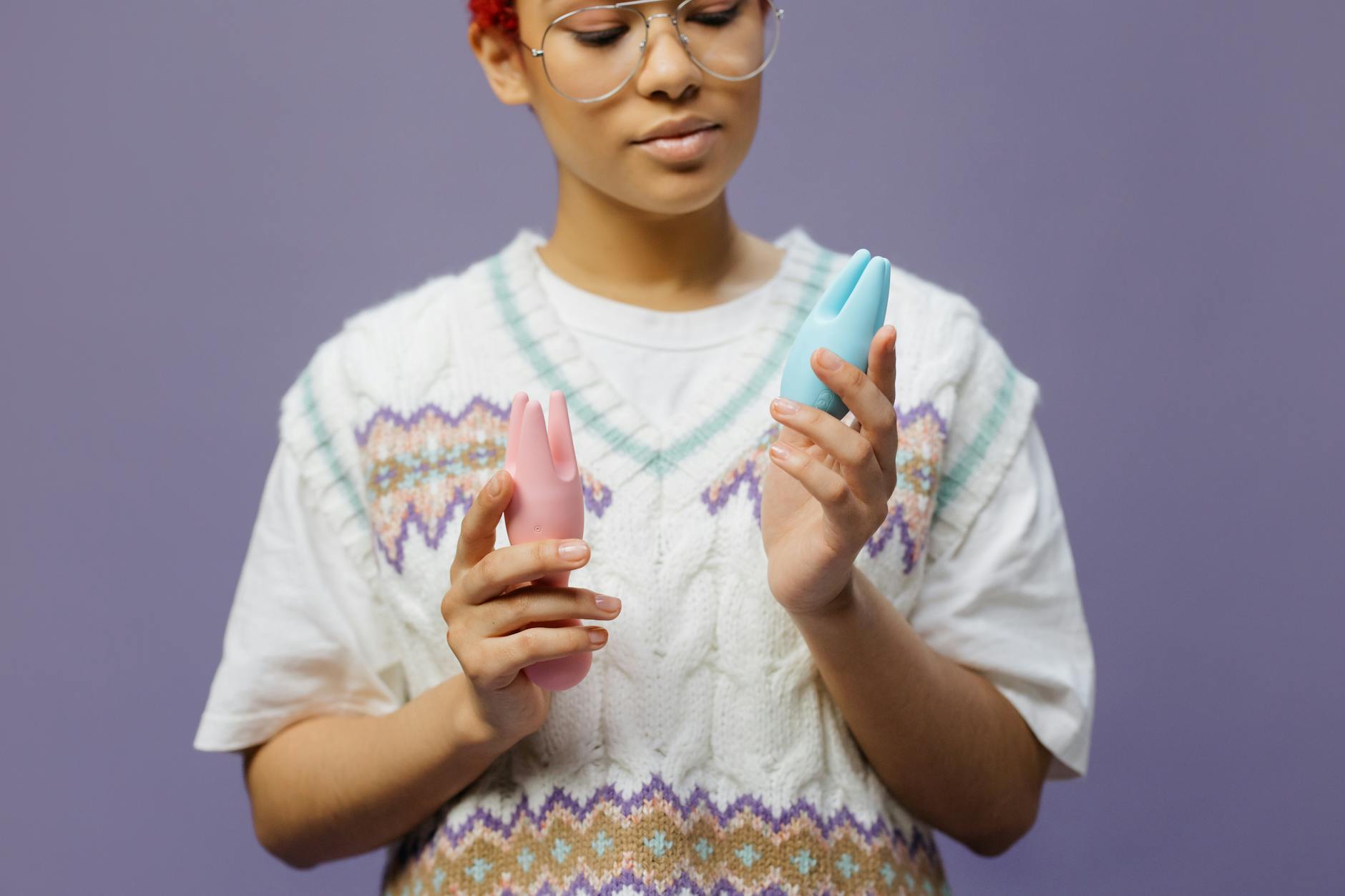
A traditional vibrator applies direct mechanical stimulation. The vibration hits your tissue head-on. A lemon vibrator, which uses air-suction technology, creates negative pressure around the clitoris rather than pressing into it. The difference is not subtle.
When your clitoris is hypersensitive, suction is often gentler than vibration because it distributes stimulus over a wider area and doesn't require the same kind of friction pressure. You're not grinding. You're creating a gentle seal and letting air-pulse patterns do the work. It's like the difference between someone poking your arm and someone cupping their hands over it. Same stimulation, completely different sensation.
The reset protocol
If you're coming off a period of overuse or high sensitivity, here's how to reintroduce a lemon vibrator safely:
Step 1: Rest day one. Do not use any vibrator for at least 3-5 days. Let inflammation settle. Your clitoris is begging for a break.
Step 2: Reintroduce on low, external only. On day 5 or 6, try the lowest setting (usually pattern 1 on a lemon clitoral vibrator) and hold it just above your clitoris or to the side, not directly on it. The suction should be gentler at lower settings. Keep the session short (2-3 minutes max).
Step 3: Increase contact gradually. If that felt tolerable, the next session you can try placing it fully over the clitoris but still on the lowest setting. Again, 2-3 minutes. You're retraining your body to accept sensation without pain.
Step 4: Work up frequency, not intensity. Only after several sessions at low settings should you try increasing the pattern level. Stay with lower patterns for longer sessions instead of jumping to higher intensity immediately.
Most people find they can return to normal use within 2-3 weeks using this protocol.
The anatomy that matters
Your clitoris has about 8,000 nerve endings packed into a few millimeters of tissue. When you're hypersensitive, those nerves are firing at low threshold. Direct, intense stimulation overwhelms them. Gentler approaches, especially those that distribute the stimulus wider, give your nervous system time to process.
The suction mechanism of a lemon vibrator creates a broader, more diffuse stimulation pattern than a traditional bullet or wand. Instead of a focused point of vibration, you're getting pulsing negative pressure across the entire sensitive area. For hypersensitive clitorises, this is often the difference between pleasure and pain.
Positioning and angle adjustments
Not all contact is equal. Small shifts in angle or positioning can dramatically change how stimulation feels.
Angle the device inward slightly. Instead of direct perpendicular contact, tilt the lemon vibrator so it's angled slightly toward your body and pubic bone rather than pressing straight on. This reduces the intensity of direct clitoral contact while still using the suction mechanism.
Create distance with folds. Your labia provide natural buffering. Place the device so it sits against your outer labia rather than your clitoris itself. The suction still works, and your clitoris gets indirect, gentler stimulation through tissue layers.
Experiment with off-center placement. You don't have to center the seal directly over your clitoris. Try positioning it slightly to one side or allowing it to partially cup your entire vulva rather than just the glans. Many people with sensitivity find this more comfortable initially.
Small adjustments often matter more than intensity levels.
Using lubrication strategically
Lube is not just about glide. It's also a sensory buffer and a comfort tool for hypersensitive tissue.
Use a slick, good-quality water-based lubricant before every session if you're managing sensitivity. It reduces friction, creates a slight cushioning layer between the device and your tissue, and honestly just feels nicer. It also allows you to experiment with longer sessions because the tissue isn't drying out under repeated stimulus.
Reapply lube every 3-4 minutes during a session, especially if you're working at low intensity and need longer warm-up time. Dry tissue plus sensitivity equals pain. Lubricated tissue gives you permission to explore longer.
When to actually stop
There's a difference between "this is intense" and "this hurts." Listen to the second one.
Intensity that feels strong but tolerable is often okay. Pain is not. If you feel a sharp sting, burning, or rawness, turn the device off immediately. You've hit a nerve response that's not pleasure waiting to happen. It's tissue distress.
If pain appears consistently at every session, take a 1-2 week break from that device entirely. Then try again at the lowest setting. If it returns, consider whether you have an underlying inflammatory condition (yeast, BV, dermatitis) that needs treatment first. Sometimes the kindest thing you can do for your sensitivity is solve the actual problem.
Managing expectations and patience
Hypersensitivity often comes with frustration. You want to feel good the way you used to. Your body is not cooperating. That frustration is valid. It's also counterproductive.
Your nervous system responds to stress and pressure. If you're gripping a lemon vibrator and mentally demanding it work while tensing with anxiety, your pelvic floor tightens and sensation gets worse. It becomes a spiral.
Instead, use these sessions as permission to slow down. A 5-minute session at low intensity with zero expectation is genuinely more useful than a frustrated 20-minute session fighting your body. Quality over duration. Pleasure over achievement.
Many people find that when they stop trying to force sensation and instead approach their clitoris with curiosity and gentleness, sensitivity naturally settles within weeks.
FAQ
Can clitoral hypersensitivity go away permanently?
Most cases are temporary and linked to cycle, overuse, or inflammation. Once you address the root cause, sensitivity typically settles within 2-4 weeks. Some people have chronic sensitivity linked to nerve conditions or hormonal patterns, which requires longer-term management. If sensitivity persists beyond 6 weeks of rest and gentle reintroduction, check with a gynecologist.
Is a lemon vibrator better than other vibrators for sensitive clitorises?
The suction mechanism in a lemon clitoral vibrator does tend to be gentler than traditional vibration because it distributes stimulus over a wider area. That said, sensitivity is individual. Some people find gentle vibration tolerable and suction irritating. Start at the lowest setting of whatever device you choose and go slower than feels natural.
How do I know if my sensitivity is from overuse or something medical?
Overuse sensitivity typically started after increased vibrator use and feels like a dull ache or rawness that improves with rest. Medical sensitivity (yeast, BV, dermatitis, nerve conditions) often includes itching, burning with urination, discharge, or pain during non-sexual activity. Medical issues don't improve with vibrator rest alone. If you're unsure, a quick gynecology visit rules out infection or inflammation.
Should I use vibration at all if I'm hypersensitive?
Yes, but strategically. Your clitoris isn't broken. It's just overwhelmed right now. A lemon vibrator on the lowest setting, used briefly and infrequently, can actually help you understand what your current threshold is. The goal isn't to push through pain. It's to find the edge of pleasure and stay there while your sensitivity recalibrates.
Can I still have orgasms with clitoral hypersensitivity?
Absolutely. Orgasms don't require intense or fast stimulation. Many people with hypersensitivity find that slow, low-intensity, consistent stimulation over 10-15 minutes actually feels more orgasmic than fast vibration. Your body might just need different parameters than it did before.
How long before I can go back to normal vibrator use?
If you're doing the reset protocol consistently, most people return to their usual patterns within 3-4 weeks. Start low, go slow, and don't jump intensity levels just because a few sessions felt good. Steady recovery is faster than yo-yoing between intensities.
The real endpoint
Clitoral hypersensitivity is your body's way of saying something needs to change. Sometimes that's a break. Sometimes it's a different approach. Sometimes it's medical treatment. A lemon vibrator's gentler suction mechanism often helps, but it's not magic. What matters is listening to what your body actually needs right now, not what it needed last month or what you think it should want. That's where real pleasure lives.