
The real fear hiding behind the objection
Let's be straight: when your partner says lemon clitoral vibrators ruin intimacy, they're not actually worried about the toy. They're worried about what it means. That you need something they can't provide. That they're not enough. That the closeness you have will somehow become transactional instead of tender.
That's a relationship issue wearing a toy-shaped disguise.
And here's the thing. If you try to convince them that a lemon vibrator is actually fine while ignoring the real anxiety underneath, you'll fail every time. The conversation will loop. They'll say it feels impersonal. You'll say it's just a tool. Nothing changes.
What the research actually shows
Couples who introduce vibrators together don't report less intimacy. They report more. Not because the toy is magic, but because they had to have a vulnerable conversation first. They negotiated. They explained desire. They looked at each other and said, "I want this, and I need you to understand why."
That conversation is more intimate than most people ever have.
The couples who struggle are the ones where one partner introduces a toy without asking, or where the conversation becomes defensive instead of curious. A lemon sucker doesn't ruin intimacy. Unspoken resentment does.
The conversation to have before you show them anything
Not a pitch. Not a negotiation. A conversation. Here's the shape of it.
Step 1: Name the real thing. "I know you worry that if I use a vibrator, it means I don't want you. I want to be really clear: that's not true. Here's what's actually happening in my body."
Then tell them. Maybe you need more intensity to orgasm. Maybe your clitoris is less responsive after medication. Maybe you just want variety, the same way you might want different positions or times of day. Be specific. Vague explanations make them fill in the blank with their own fears.
Step 2: Make it about addition, not replacement. "This isn't instead of us. It's an addition to what we do. I want to experience more pleasure, and I want you here with me."
This is true if it is true. If you're actually thinking about using a lemon vibrator solo and that's fine, say that too. But don't pretend this is couple-focused if it isn't. Honesty builds trust. Pretense erodes it.
Step 3: Invite their curiosity, don't demand acceptance. "I'd like to show you how it works. No pressure. I just want you to understand what this actually feels like."
Many partners who resist toys are operating on pure imagination. They're picturing something clinical or cold. Seeing a silky lemon-shaped toy in your hand, hearing that it uses gentle suction instead of vibration, watching your face light up when you describe it? That changes things.
How to actually use it together if they're willing
If they say yes (even a cautious yes), don't jump straight to penetration or sex. Start smaller.
First time: show, don't demonstrate. Put the lemon vibrator in their hand. Let them feel the weight of it, the material. Let them see the controls. Let them turn it on at the lowest setting and feel the sensation on their own palm. Most anxiety lives in the unknown. Familiarity is a cure.
Second time: external only, partner present. Lie together clothed or partially clothed. Use the lemon clitoral vibrator externally while they watch or touch you elsewhere. Shoulder, chest, thigh. The goal isn't for them to feel replaced. It's for them to see that pleasure and connection aren't the same channel.
Third time: they participate. "I love when you touch me here while I use this." Or "Can you hold me?" The toy becomes one thing in a constellation of sensations. Not the whole experience. Just part of it.
Then, if it feels good, build from there. Maybe they apply lube while you use it. Maybe they hold the vibrator themselves. Maybe during foreplay they help you warm up before sex. The lemon vibrator becomes a tool in your shared erotic vocabulary, not a threat.
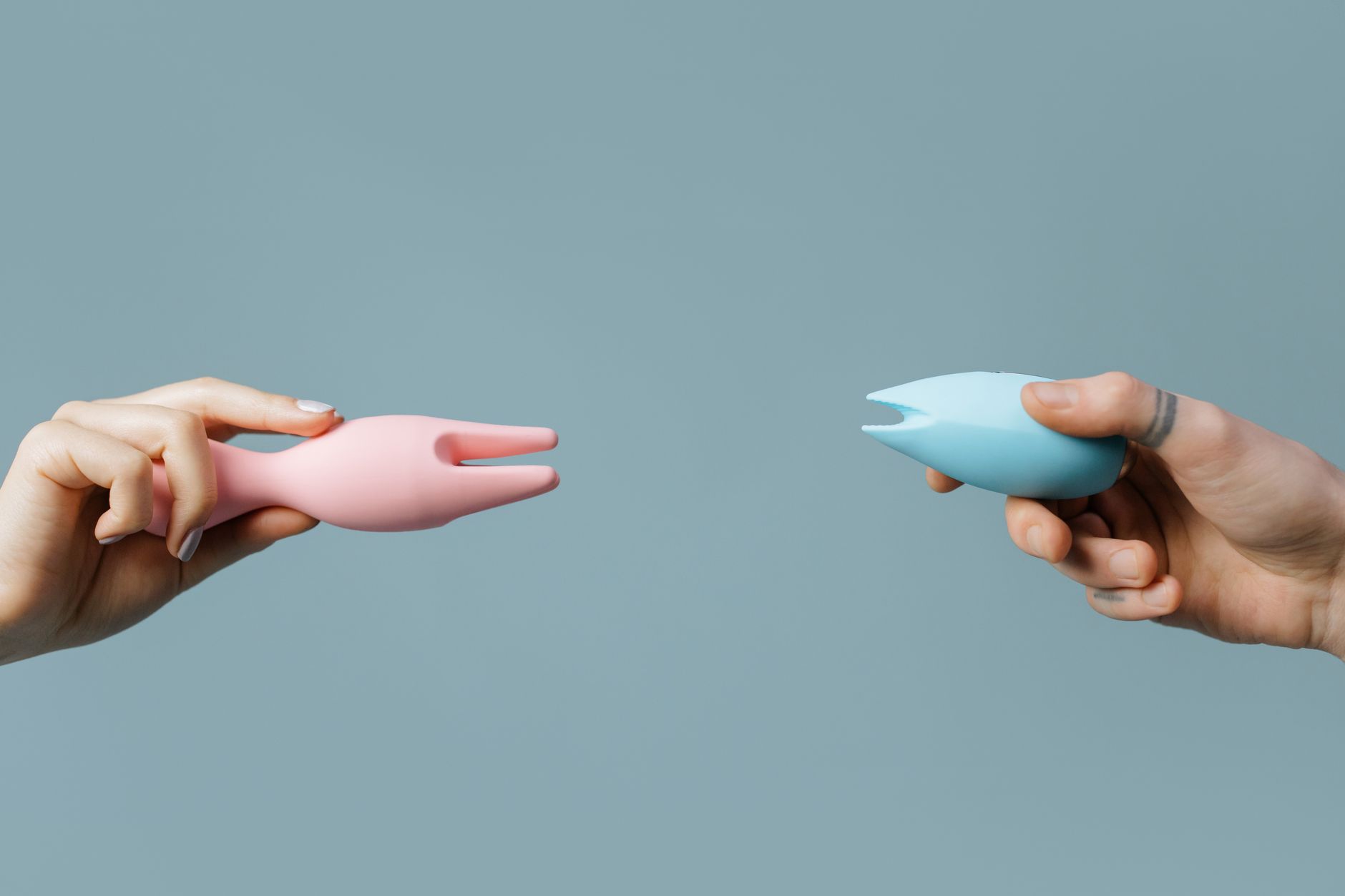
Photo by cottonbro studio on Pexels
The conversation that reframes why toys aren't about "enough"
At some point, probably after they've seen the toy and maybe felt it, say this:
"I know you worry that toys mean you're not enough. That's coming from a place of caring about me, and I appreciate that. But here's what I need you to know. My body is complicated. Sometimes I need more time. Sometimes I need different stimulation than I can get from just partnered sex. That doesn't mean you're not enough. It means my pleasure is bigger than any one thing."
Then pause. Let them sit with that.
"You're not trying to give me a perfect orgasm every single time either, right? Sometimes you're tired. Sometimes the angle is off. Sometimes I'm in my head. That's normal. This is the same. I'm giving myself the best chance to feel good, and I want you there with me while I do it."
This reframe works because it's true and because it takes the pressure off them to be everything. Most partners don't actually want to be the sole source of their partner's pleasure. The fantasy of being that is usually a story layered on top of anxiety, not something they actually want to carry.
When they stay resistant
Some people need more time. Some people need to see other couples talk about it. Some people need to understand their own fears first.
You cannot logic someone out of an emotion. If your partner is genuinely uncomfortable with lemon vibrators or any toy, you have a choice. You can use one solo and be honest about it. You can choose not to, if that's what feels right for your relationship. You can go to a relationship counselor who specializes in sexual dynamics and have a neutral third party help you both understand what's actually happening.
What you can't do is sneak around, convince them you're not doing something you are, or resent them for a boundary they've set. Those paths lead to betrayal, not intimacy.
When resistance starts to shift
Sometimes the barrier isn't a hard no. It's a soft maybe wrapped in worry. Watch for signs that your partner is opening up.
They ask questions. "How does it actually work?" "Does it feel different than vibration?" "Why did you choose that one?" Curiosity is the first crack in resistance.
They make jokes about it. Humor is often how people process discomfort. If they start teasing you about your lemon sucker collection, they're getting comfortable.
They touch it without you offering. One day they pick it up, feel it, put it back. That's huge. It's normalization happening in real time.
They ask about your experience. "Did you like it?" "How did it feel?" "Do you want to use it again?" They're becoming curious about your pleasure as separate from their role in it. That's the shift you're looking for.
The long game: building a shared erotic language
This isn't about convincing your partner that lemon clitoral vibrators are great. It's about building a relationship where both of you can talk about what you want without shame, where pleasure is collaborative instead of adversarial, where a toy is just a tool among many in your shared sexuality.
That takes time. It takes conversation. It takes being willing to hear "I'm scared" and respond with curiosity instead of defensiveness. It takes saying "I need this" and meaning it, not backing down when it gets uncomfortable.
The lemon vibrator is just the vehicle. The real work is the conversation.
People also ask
Why does my partner think vibrators make sex feel less intimate?
Most partners aren't actually worried about the toy itself. They're anxious that it means they're not satisfying you, or that you'd rather be alone, or that your sex life will become transactional. These are relationship anxieties wearing a toy-shaped disguise. The solution isn't to defend the toy. It's to talk about what's underneath the worry. When you say "I want us to try this together," you're actually saying "I trust you with a part of my sexuality I've kept hidden." That's deeply intimate.
Can using a lemon vibrator with my partner actually bring us closer?
Yes, if the conversation happens first. Couples who introduce toys intentionally report higher satisfaction and more emotional connection than couples who don't use toys. The key is that vulnerability. You're saying "Here's what I need for my pleasure, and I want you in the room while I pursue it." That requires honesty, which is the foundation of real intimacy.
What if my partner refuses to accept any kind of toy, including a lemon sucker?
First, listen without defending. Ask why. Is it religious conviction? Pornography trauma? Fear that they're not enough? Disgust? Each reason requires a different conversation. If it's a hard boundary for them, you have to decide what that means for you. You can respect their boundary and not use toys. You can use toys alone and be honest about it. You can seek couples counseling to explore whether this is about the toy or about something deeper in your relationship.
How do I introduce my partner to a lemon vibrator without making them feel threatened?
Start with conversation, not the toy. Explain what you want and why. Then let them see it, feel it, understand it's not some invasive force. Use it on yourself while they're present so they can see it's not replacing them. Incorporate them slowly. Maybe they apply lube. Maybe they hold it while you guide their hand. Maybe they use it on you themselves. The goal is to make the toy a collaborative element of your shared sexuality, not something that happened to them.
What if my partner wants to use a lemon clitoral vibrator but I'm the one who's uncomfortable?
Same framework in reverse. Ask yourself what you're actually afraid of. That you can't satisfy them? That they prefer it to you? That you'll lose control? Get curious about your own resistance before you ask them to change. Often when we move toward our discomfort instead of away from it, we find it wasn't what we thought. And if you genuinely can't get there, that's information too. Couples therapy can help you understand why and whether it's a dealbreaker.
Can we use a lemon sexual toy during partnered sex itself?
Absolutely. Many couples use clitoral vibrators during intercourse. It can intensify sensation, help with orgasm, and reduce performance pressure on the partnered person. Start by talking about what you both want. Maybe you use it on yourself while they're inside you. Maybe they use it on you. Maybe it's foreplay only. There's no right way, only the way that feels good to both of you.
The real intimacy lives in the conversation
I work with couples who are stuck on this issue all the time. The pattern is almost always the same. One person wants to try lemon vibrators or any toy. The other feels threatened. The first person feels judged. They end up in a loop where nothing changes.
The breakthrough never comes from the toy itself. It comes from being willing to say "I'm scared" and "I hear you" in the same conversation. It comes from choosing curiosity over defensiveness. It comes from understanding that your partner's pleasure isn't a referendum on you.
A lemon sucker won't fix a relationship that's built on shame or control. But in a relationship built on trust and openness, it can become a normal, even joyful part of your shared life.
Start there. Have the conversation. The rest follows.