
Let's talk about the antidepressant trade-off nobody mentions until it's too late
You started taking an SSRI or another antidepressant, and it worked. Your anxiety dropped. The intrusive thoughts quieted. You could breathe again. And then, somewhere around week four, you noticed something else had dropped: sensation. Orgasms became harder to reach, or they stopped showing up entirely. Welcome to one of the most common sexual side effects of psychiatric medication, and one that most doctors minimize or skip over entirely.
Here's the thing nobody tells you: this is not a reason to quit your medication. But it's also not something you have to accept as the permanent price of mental health. Clitoral vibrators like the Lem exist partly because of this exact problem, and they work in ways that matter.
How antidepressants actually mess with pleasure
SSRIs (sertraline, paroxetine, fluoxetine) and SNRIs work by increasing serotonin in your brain. That's good for mood, anxiety, and intrusive thoughts. But serotonin also regulates sensation and the neurological cascade that leads to orgasm. When you're on these medications, that chain reaction gets slower, quieter, or sometimes just stops.
The dampening happens in layers. First, your baseline arousal threshold rises. What used to trigger interest now barely registers. Second, the physical sensations during sex become muted, almost like a blanket got laid over your nerve endings. Third, and most frustratingly, your body can take twice as long to reach orgasm, if it gets there at all.
This is called antidepressant-induced sexual dysfunction, or AISD. It affects 40 to 60 percent of people on SSRIs. That's not rare. That's normal. And yet it's barely discussed because doctors assume you'll just accept it or because they don't think it's their problem to solve.
It is.
Why vibrators work differently when meds have flattened sensation
Here's what's crucial to understand: a lemon clitoral vibrator like the Lem doesn't work the same way your hand does. Manual stimulation relies on your existing nerve sensitivity to feel good. When antidepressants have numbed that, your fingers might feel like almost nothing is happening.
Air-suction vibrators work through a different mechanism entirely. Instead of relying on friction or vibration alone, they create a gentle pulsing pressure that stimulates the entire clitoral area at once. This activates a broader network of nerves and creates a different sensation profile than traditional vibration. For people whose sensation has been flattened by medication, this broader stimulation often breaks through the numbness in a way that direct vibration doesn't.
The Lem operates at a relatively lower intensity compared to some other vibrators, which matters here. You're not trying to force sensation through a dead zone. You're using a gentler but more distributed stimulus that can actually register when your baseline sensitivity has been reset by your medication.
The practical steps that actually help
If you're using a lemon clitoral vibrator for the first time while on antidepressants, here's what I recommend.
Start with the lowest setting and give it time. Don't jump to intensity 5 because you're expecting intensity 5 to feel like it used to. The goal isn't to recreate what pleasure felt like before meds. It's to find what your body can feel now. Spend a full session or two on pattern 1 or 2. You might be surprised at what registers once you're patient.
Create the longest possible runway. Antidepressants slow arousal, so budget 30 to 40 minutes for foreplay if you have a partner, or the same for solo exploration. Many people assume "it's not working" after 10 minutes. With AISD, you're fighting a chemical slowing of blood flow to the clitoris and a dampened arousal response. That takes time to build, even with a vibrator.
Use lube, even if you wouldn't normally. Antidepressants often reduce natural lubrication as a secondary effect. Water-based lube isn't a sign of failure. It's a tool that makes the stimulation more consistent and helps the air-suction mechanism work more effectively.
Separate what you expect from what you feel. The orgasm you get on antidepressants might feel different from the ones you remember. Smaller. Flatter. Less full-body. That's real and it's the medication, not you. The goal isn't to recreate the old experience but to find pleasure that exists in your current neurochemistry. Sometimes that means accepting that orgasm looks like a smaller wave instead of a tsunami, and that's still worth having.
Talk to your doctor, but know what to ask
Many people don't mention sexual side effects to their prescriber because they're embarrassed or because they assume "it's just how it is." Don't let that be you. The conversation goes like this: "The medication is helping my mood, but I'm noticing significant changes in sensation and difficulty reaching orgasm. What options do we have?"
Your doctor might suggest:
Timing adjustments. Some SSRIs have peak levels at different times of day. Taking your dose right after sex instead of before can sometimes help. This isn't true for all medications, so ask.
Dose reduction. A smaller dose might keep most of the mood benefit while reducing sexual side effects. Not always an option, but worth asking.
Medication switching. Some antidepressants have lower rates of sexual dysfunction. Bupropion and mirtazapine, for example, are associated with fewer AISD problems. Again, not a switch to make without medical guidance, but a real conversation to have.
Augmentation. Some people take a second medication like sildenafil (Viagra) or buspirone to counteract sexual side effects while staying on their original antidepressant. This is evidence-based and prescribed more commonly than most people know.
Why this matters beyond the orgasm itself
Intimacy in a relationship often takes a hit when one partner suddenly can't experience pleasure from sex. It's easy to blame the partner ("they're not attracted to me anymore") or yourself ("my body is broken"). Neither is true. The medication changed your neurology in a predictable way, and that can strain a partnership if it's not addressed directly.
If you have a partner, they need to understand this too. How to introduce lemon vibrators to your partner is less about sneaking a toy into the bedroom and more about saying, "My medication has changed how I experience sensation. I want us to explore this together so we can stay connected." That conversation, uncomfortable as it is, often brings couples closer than they've been in years.
Solo pleasure matters just as much. You deserve to feel good in your own body, medication or not. Using a lemon clitoral vibrator isn't a workaround for a broken system. It's a tool that acknowledges your body's current reality and works within it.
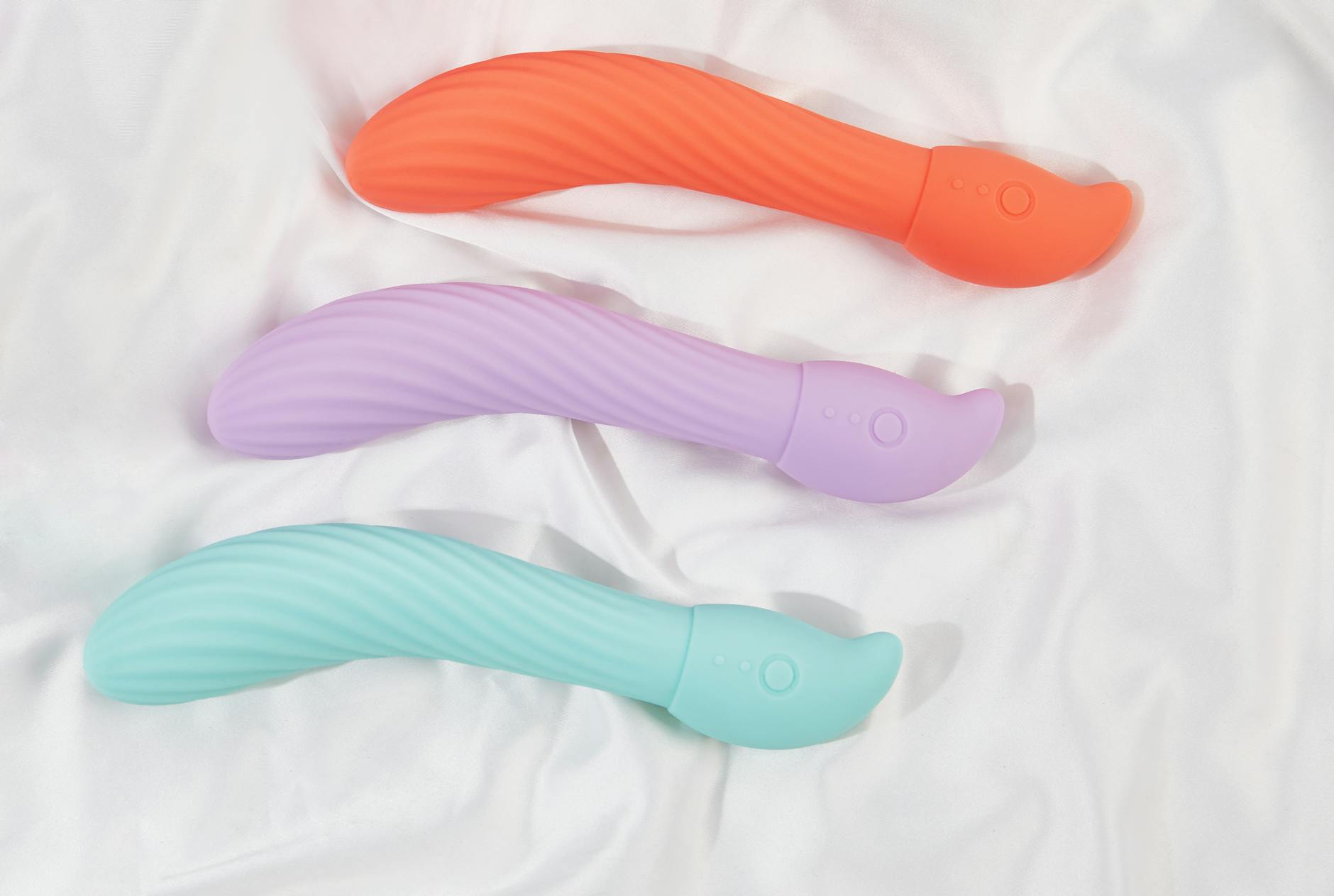
Photo by IFONNX Toys on Pexels
The timeline for improvement
You're probably wondering if sensation ever comes back. The honest answer is that it depends on you stay on the medication long-term.
Some people find that after a few months or a year, the body adapts slightly. Not back to baseline, but somewhat less numb. Others don't experience that adaptation. There's individual variability that's not fully understood yet.
What does consistently improve is your ability to work with your new normal. Once you stop fighting what the medication has changed and instead work with it, pleasure becomes possible again. That might sound like settling, but it's actually practical wisdom. You're choosing mental health and sustainable pleasure over chasing a past sensation that antidepressants have made chemically harder to reach.
FAQ: Antidepressants, vibrators, and pleasure
Can switching to a different antidepressant actually help with sexual side effects?
Yes, but not for everyone. Bupropion (Wellbutrin) and mirtazapine are less commonly associated with sexual dysfunction than SSRIs. Some people also find that SNRIs like venlafaxine have fewer sexual side effects than fluoxetine or paroxetine. That said, antidepressant response is individual. The one that works best for your depression might be the one with more sexual side effects. Work with your prescriber to find the right balance for your situation, not for a hypothetical version of you.
Is it safe to use a lemon vibrator if I'm also taking medication for sexual dysfunction?
Absolutely. In fact, combining a vibrator with medication designed to counteract sexual side effects (like sildenafil or buspirone) is actually pretty common in clinical practice. The vibrator's air-suction mechanism works through a different pathway than these medications, so they complement each other. If your doctor has prescribed something for AISD, a lemon clitoral vibrator like the Lem is a sensible addition to that plan.
How long does it take for an air-suction vibrator to start feeling good when sensation has been flattened?
It varies. Some people feel a significant difference within the first session. Others need three to five uses before their nervous system registers the sensation as "pleasurable" rather than just "something happening." Your brain has learned to expect a certain kind of stimulation, and medication has changed that expectation. Give yourself at least a few sessions before deciding it's not working. Patience is part of the treatment here.
Can I use a lemon vibrator with my partner if I'm on antidepressants and they're not?
Yes. If anything, it can rebalance things. Sometimes when one partner has medication-related sexual side effects, the other partner overcompensates or starts to feel rejected. Bringing a vibrator into shared intimacy can feel like you're both solving the problem together rather than one of you being "broken." That shift in framing alone can restore some of the pleasure that antidepressants have flattened.
Should I talk to my psychiatrist before using a vibrator while on antidepressants?
You don't need permission, but it's worth mentioning. Not in a confessional way, but in the context of "I'm working on restoring sexual function now that I'm on medication." Many psychiatrists appreciate knowing that their patients are taking an active role in managing AISD. If your doctor seems hostile or dismissive to the idea, that's information about whether they're the right provider for you long-term.
Will using a lemon clitoral vibrator make it harder for me to orgasm with a partner later?
No. In fact, many people find that the ability to reliably reach orgasm with a vibrator actually helps them understand their body better, which carries over into partnered sex. It's not about becoming dependent on the vibrator. It's about finding a sensation pathway that works with your current neurology, and that knowledge stays with you regardless of what you're using.
The real story
Antidepressants save lives. They're also complicated. The sexual side effects are real and they matter, which is why they deserve the same medical attention as mood symptoms.
Using a lemon clitoral vibrator isn't a consolation prize or proof that your medication has ruined you. It's a practical acknowledgment that your body's needs haven't changed, but the chemistry has. You deserve to feel pleasure, to experience orgasm, and to stay connected to your own sexuality while taking medication that keeps you stable and alive.
Start with your doctor. Explore your options. Be honest about what you're experiencing. And know that the fact that sensation has changed doesn't mean it's gone for good. Sometimes it just needs a different tool, a little more time, and the kind of patience you'd extend to any other part of your healing.