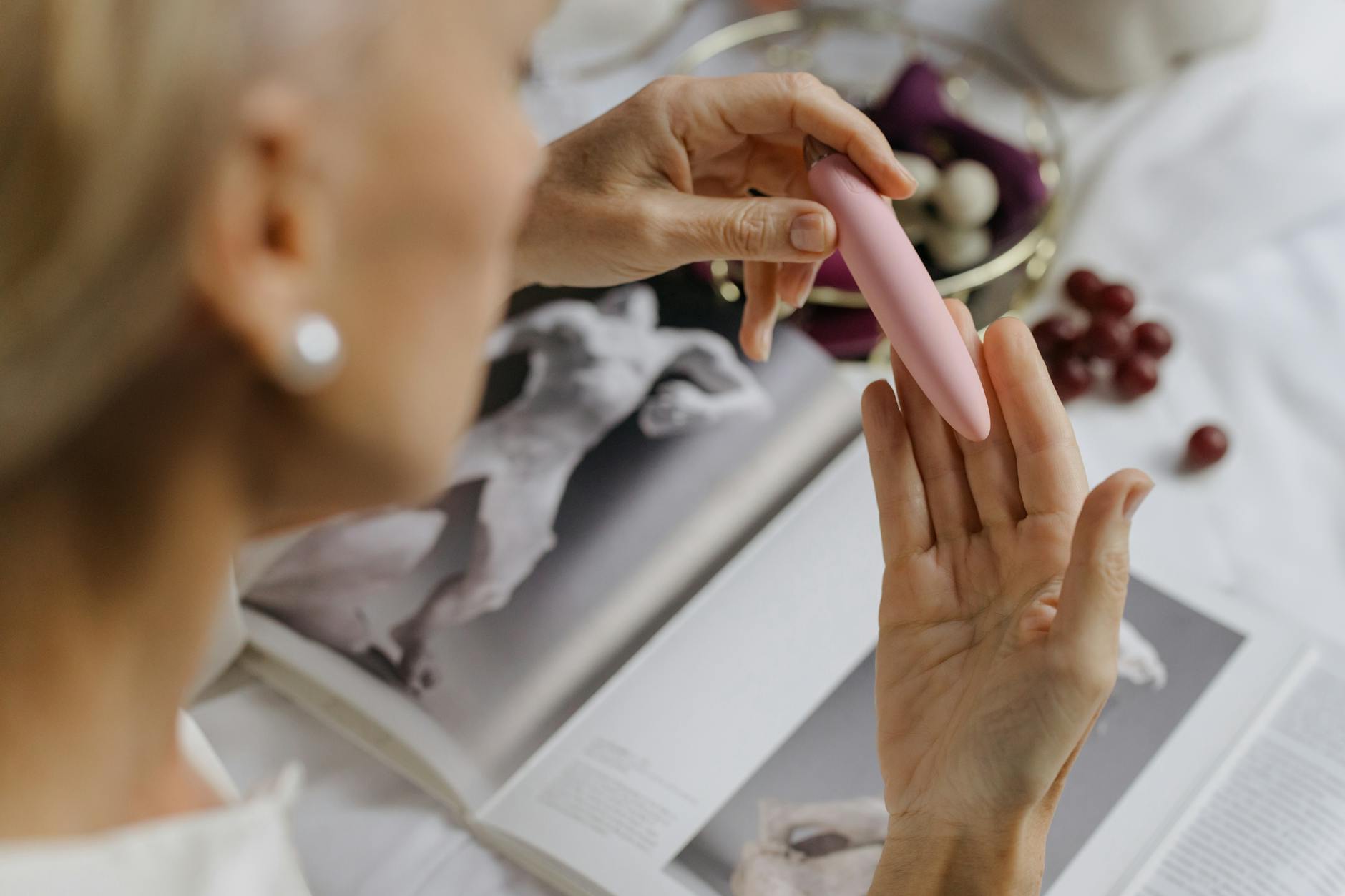
Let's talk about post-illness bodies
Honestly, nobody warns you about this part. You've recovered from the acute illness. You're back at work, back at the gym, "back to normal." But your body still feels like it's operating in a different language. Your partner reaches for you and your nervous system says no, not yet. Or yes, but differently. Or maybe you're solo and you just feel untethered from yourself.
This isn't failure. It's how bodies actually work.
What actually changes when you're recovering
Let me separate the physical from the psychological, because they're both real and they're also really easy to confuse.
Physically, illness depletes resources. Your nervous system has been in overdrive fighting off infection or managing symptoms. That doesn't just disappear. Even weeks after you're "well," your body is still in recovery mode. Blood flow is distributed differently. Energy is allocated to repair rather than pleasure. Nerve sensitivity can feel muted or, weirdly, hyper-reactive depending on what you had and how long it lasted.
Sensation shifts too. Some people report that direct touch feels almost painful post-illness, even when they're mentally ready. Others find they need more stimulation to register anything at all. Long COVID specifically brings brain fog and fatigue that makes arousal feel like climbing uphill in hiking boots.
Psychologically, there's often this underlying anxiety. Your body surprised you by breaking. Now you're checking in with it more cautiously. Am I really ready? Is it safe? Will I crash after? That vigilance absolutely shows up in your pleasure response.
The good news: this is temporary. Not always quick, but temporary. And tools like a lemon clitoral vibrator are genuinely designed for this exact transition.
Why suction toys work better during recovery
Think about what a lemon vibrator does differently than a traditional vibrator. Instead of friction against tissue, it uses gentle suction to stimulate the clitoral complex. That distinction matters when you're recovering.
Traditional vibrators require your body to be more ready. They ask for engagement. A lemon sucker invites your body in slowly. The pattern can start whisper-soft. There's no pressure to "perform" or prove you're recovered. You can find the exact rhythm and intensity that your body wants today, not what it wanted two months ago.
Post-illness bodies also respond better to suction because there's less direct friction. If your vulva feels tender or oversensitive, that matters. If your pelvic floor is tight from stress and illness, suction is gentler on those muscles. You're not forcing anything.
There's also something about the containment of suction that feels safer psychologically. Your nervous system can relax a bit more because the sensation is more localized and predictable.
Starting over: a realistic timeline
Here's what I tell people in recovery: don't compare your post-illness arousal to your pre-illness baseline for at least four to eight weeks. Your brain doesn't trust your body yet. Your body is still figuring out how to allocate resources. That's not weakness; that's physiology.
Week one to two: Solo exploration without pressure to perform. Just touching, noticing, seeing what feels safe. No goal of pleasure or orgasm. This is reconnaissance.
Week three to four: Introduce a lemon vibrator at the lowest setting for five to ten minutes. Pattern 1 only. This is about your nervous system learning that this is safe and recoverable.
Week five to six: You can extend time or try pattern 2 if pattern 1 feels boring. But honestly, stay bored. Boredom is information that your body is ready for slightly more stimulation. That's progress.
Week seven plus: Your body will tell you when intensity feels good. Some people get there faster. Others need more time. There's no finish line you're supposed to hit.
Practical setup that actually helps
Environment matters more post-illness than you'd think. Your nervous system has been in threat mode. A few things genuinely help:
Warmth and softness. Not a cold bed, not rushed. Spend ten minutes under a blanket before you even touch yourself. Warm hands. This tells your nervous system it's safe to relax.
Zero timeline. If you have thirty minutes free, plan to use five to ten and let the rest just happen. Or not. The moment you're checking a clock, you've shifted back into performance mode.
Lube, always. Post-illness bodies often produce less natural lubrication. This isn't a sign you're not ready. It's a sign your body needs support. Water-based lube feels natural and removes any friction from the equation.
Start with the lowest setting. Even if you used a lemon clitoral vibrator before illness, your baseline has shifted. Respect that. Pattern 1 isn't boring; it's appropriate.
Have an off switch in arm's reach. Knowing you can stop instantly reduces anxiety. Most people never need to, but the knowledge alone helps your nervous system stay regulated.
The mental side nobody talks about
Your brain is doing something really important right now. It's making sure you don't push your body back into a crash. That protective mechanism is saving you from a relapse. It's not anxiety you need to overcome; it's wisdom you need to listen to.
If you're partnered, this is worth explaining. Not oversharing, just: "My body needs time. Pleasure is coming back, and I'm using tools that help me go at my pace." Your partner doesn't need to be involved in your recovery masturbation unless you want them to be. Their job is to not push.
If you're solo, that same permission applies to yourself. You're not falling behind on pleasure. You're rebuilding a relationship with your own body. That's the whole work right now.
Some people find that using a lemon vibrator while listening to something grounding (not music, something spoken that requires attention) helps keep the anxious part of their brain from hijacking the experience. Others prefer quiet. Figure out what keeps you present.
When to go slower (and it's not what you think)
If you notice that five minutes with a lemon sucker leaves you exhausted or brain-foggy for hours, you went too fast. Scale back. This isn't failure. Your body is literally telling you it needs more recovery time. Listen.
If pleasure never comes, that's usually not a sign you're broken. It's a sign your body isn't ready yet. Solo pleasure requires trust and presence. If you're in survival mode, your nervous system won't let you have it. That changes. Keep reconnecting gently. The pleasure comes back.
If you feel pain, stop. Post-illness pain during sex or with toys usually means pelvic floor tension, irritation, or that you genuinely need more time. None of those are permanent, but they all require patience.
The reconnection part that matters most
Using a lemon vibrator post-illness isn't really about pleasure, even though that's the goal. It's about proving to yourself that your body is trustworthy again. Each time you touch yourself gently and don't crash, you build evidence that recovery is real. That's the actual work.
Your body didn't betray you by getting sick. And it's not rejecting pleasure now. It's just asking for time and gentleness. A tool like a lemon clitoral vibrator is designed exactly for that conversation. It lets you take control of intensity and rhythm without pressure.
Most people get back to their baseline within two to three months of consistent, patient reconnection. Some faster, some slower. But it happens. Your capacity for pleasure isn't gone. It's just rebooting.
People Also Ask
How long after illness can I safely use a vibrator?
When you feel like using one without pressure or pain, you're ready. That might be two weeks in or two months in. There's no clinical rule here. If you've had significant illness like Long COVID, pneumonia, or post-hospitalization recovery, waiting four to six weeks before introducing toys is usually gentler on your system. Your GP can give you more specific guidance based on what you had.
Why does my lemon vibrator feel uncomfortable now when it never did before?
Your nervous system is different post-illness. Your pelvic floor might be tighter. Your tissues might be more sensitive. Your mental relationship to pleasure has shifted. Any or all of these could apply. Lower the intensity, use more lube, take more time. Your body will adjust. If pain persists beyond four weeks, check in with a pelvic floor physical therapist.
Can I use a lemon sucker if I'm still fatigued after illness?
Absolutely, but keep it short. Five to ten minutes at the lowest setting is totally fine. You're not trying to have a big orgasm right now. You're just reconnecting. If it wipes you out, wait longer between sessions. Your pleasure doesn't have to earn your fatigue.
Is it normal to need more lube after being sick?
Completely normal. Illness affects hydration, hormones, and nervous system regulation. All of those influence lubrication. Use as much as you want. Water-based lube is always safe with lemon clitoral vibrators and feels natural against your skin. This isn't a sign you're broken; it's just your body's current needs.
Should I tell my partner I'm using a lemon vibrator to recover?
If you're partnered and comfortable with your partner knowing, being straightforward actually removes mystery and worry. Something like: "I'm taking time to reconnect with my body after being sick. Using a toy helps me go at my pace." If you'd rather keep it private, that's your choice too. Your pleasure recovery doesn't require anyone's approval.
How do I know if I'm pushing too hard too fast?
Your body will tell you through fatigue, soreness, or brain fog that lasts hours after. If solo pleasure leaves you crashed the next day, you overextended. Back off. Add more time between sessions. If you feel good during and fine after, you've found your sweet spot. Listen to that.
Recovery isn't linear, and neither is rebuilding pleasure. But it happens. Your body wants to feel good again. Tools like a lemon vibrator just make the path gentler.